



The Headline Web Desk
A powerful 7.1-magnitude earthquake that struck Japan’s southern island of Kyushu has left at least 34 people dead and nearly 100 injured, while thousands remain displaced as emergency teams continue search and rescue operations across the affected region. Authorities have warned that strong aftershocks could continue for several days, increasing the risk of further building collapses and landslides.
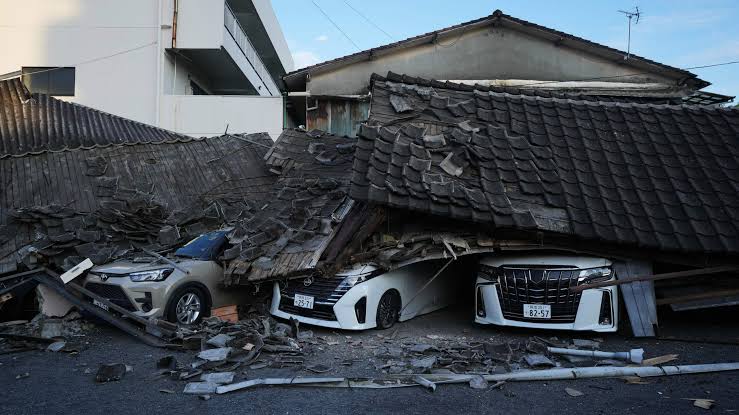
The earthquake’s epicentre was near Kumamoto Prefecture, where entire neighborhoods suffered extensive damage. More than 1,500 buildings have been damaged or destroyed, while roads cracked open, bridges sustained structural damage, and several railway services were suspended for safety inspections. Thousands of households also lost electricity and running water immediately after the quake.
Rescue workers, firefighters, police, and Japan’s Self-Defense Forces have been deployed across the region to search for survivors trapped beneath collapsed buildings. One of the worst-hit locations was an AEON shopping mall, where a powerful explosion following the earthquake caused part of the structure to collapse, resulting in multiple casualties. Rescue teams have continued working around the clock using heavy machinery, rescue dogs, and thermal imaging equipment to locate survivors.
The disaster has also severely impacted local industries. Several factories belonging to major automotive manufacturers, including Toyota, Nissan, Mitsubishi, and Aisin, temporarily suspended production while engineers assessed structural damage and supply chain disruptions. The affected region is also one of Japan’s major semiconductor manufacturing hubs, prompting temporary shutdowns at several chip production facilities. Industry experts say the interruptions could affect global supply chains if production does not resume quickly.
Adding to the crisis, thousands of residents are now living in emergency shelters or sleeping inside their vehicles as temperatures across the region climb above 36°C. Limited access to clean water and electricity has raised concerns about dehydration and heat-related illnesses, particularly among elderly residents and children. Authorities have begun installing temporary cooling systems in evacuation centres while distributing drinking water, food supplies, and emergency medical assistance.
The Japan Meteorological Agency (JMA) continues to monitor seismic activity and has urged residents to remain cautious due to the possibility of additional strong aftershocks. Engineers are carrying out inspections of schools, hospitals, bridges, railways, and other public infrastructure before allowing normal operations to resume.
Japan, located along the Pacific Ring of Fire, experiences frequent earthquakes due to the movement of several tectonic plates. While the country has some of the world’s strictest building standards and disaster preparedness systems, the latest earthquake has once again demonstrated the immense challenges posed by major seismic events and the importance of rapid emergency response.

Other Articles